Skip to content
SONNWINN
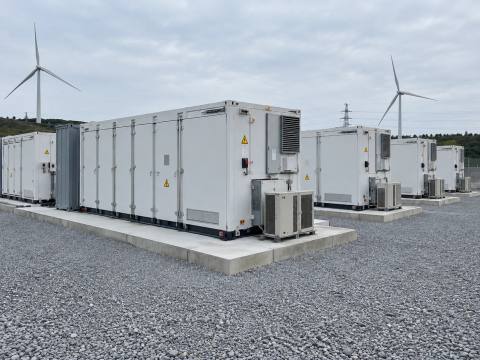
Battery storage containers with air-conditioning units on concrete foundations, wind turbines in the background

Noise assessment for battery storage and PV systems

Noise immission predictions to TA Lärm and DIN ISO 9613‑2 for battery storage systems, transformers and inverters in Germany – from site evaluation to the expert report.

Background

Battery energy storage systems (BESS), inverters and transformers produce continuous noise from ventilation, air conditioning and transformer operation – depending on the mode of operation, also at night.

In the permitting procedure, particularly for BESS projects, it must therefore usually be demonstrated that the immission guide values of the TA Lärm (German Technical Instructions on Noise Abatement) are met at the relevant buildings.

We prepare the assessments for the permitting procedure and also advise you from planning to approval: on the choice of site and components, on queries from the authority and on possible noise control measures.

Immission guide values outside buildings
Areadaynight
Industrial areas70 dB(A)70 dB(A)
Commercial areas65 dB(A)50 dB(A)
Urban areas63 dB(A)45 dB(A)
Core, village and mixed areas60 dB(A)45 dB(A)
General residential areas, small settlement areas55 dB(A)40 dB(A)
Purely residential areas50 dB(A)35 dB(A)
Spa areas, hospitals, nursing homes45 dB(A)35 dB(A)

Source: TA Lärm No. 6.1. Night-time: 10 pm to 6 am.

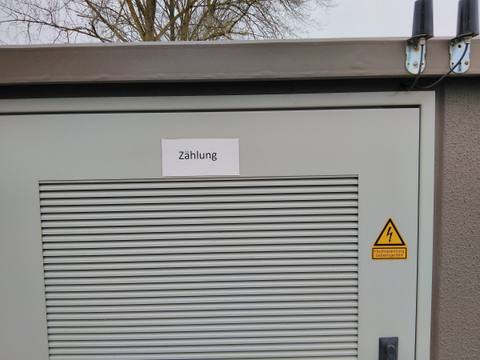
Transformer station with a large ventilation grille and electrical hazard sign
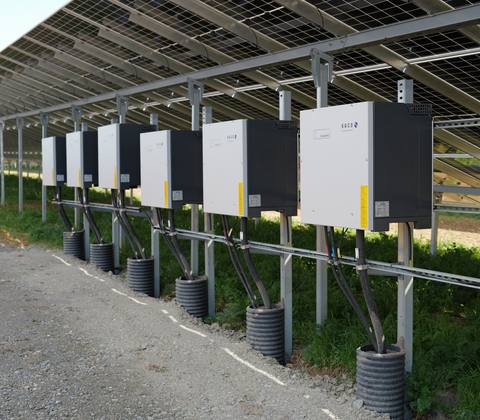
Row of string inverters on the mounting structure of a ground-mounted PV system
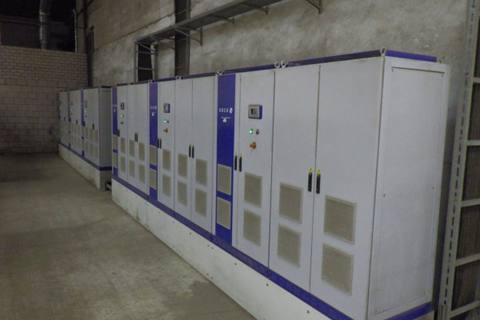
Cabinets of central inverters with ventilation grilles in an operations building

Procedure

Every assessment starts with a site evaluation. It tells you at an early stage whether the installation is approvable or whether mitigation measures are needed.

Step 1

Site evaluation

Relevant immission points, area classification to TA Lärm, check for noise emission quotas and an initial estimate of the levels.

Result: an early statement on whether the installation is approvable or whether mitigation measures are needed.

Step 2, if required

Agreeing the measures

If measures are needed, we agree them with you – for example quieter equipment, a different layout or screening.

Aim: an approvable design as the basis for the expert report.

Step 3

Detailed prediction

Frequency-dependent propagation calculation to DIN ISO 9613‑2 in a 3D model with terrain, buildings and screening.

Assessed is, wherever possible, the approvable installation including the agreed measures.

Expert report for the permitting procedure
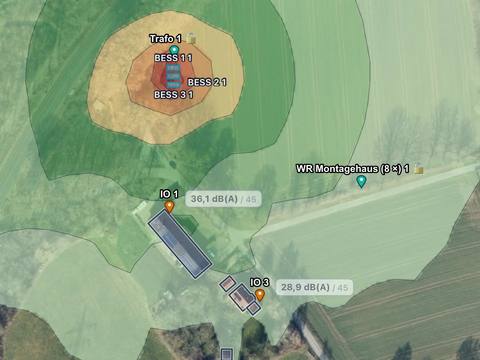
Noise map on the site plan: level zones around battery storage and transformer, night-time rating levels at two immission points compared with the guide value of 45 dB(A)
Example of a noise map
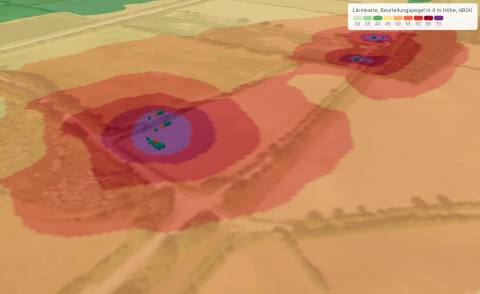
Noise map in the 3D terrain model: rating levels at a height of 4 m around two battery storage sites
Example of a noise map in the 3D model
Rating level, dB(A) 303540455055606570 Detailed prediction to DIN ISO 9613‑2, calculated with BESS-NoiseCheck

Measures if values are exceeded

Where necessary and possible, we set out solutions that make the project approvable and demonstrate their effect by calculation:

  • quieter versions of the equipment (manufacturer variants, fan curves)
  • noise-reduced night-time operation or curtailment
  • changed layout and orientation of containers and stations
  • screening by walls or earth banks
  • comparison of variants under the same assumptions

Further services

Noise quota verification

Verification to DIN 45691 for sites in commercial and industrial areas.

Review of manufacturer data

Matching the measurement report to the planned unit, measurement to DIN EN ISO 3744/3746.

Tonality and low-frequency noise

Assessment to DIN 45681 and DIN 45680, for example for transformers.

Expert statements

Technical statements on queries from the approval authority.

Review of existing assessments

Review of third-party noise assessments for completeness, plausibility and conformity with standards.

Acceptance measurement

Measurement concept where the permit requires an acceptance measurement.

Portfolio and minimum distances

Evaluation of several sites and minimum distances for site selection.

Glare and noise assessments

For PV projects with storage, also the glare assessment.

Frequently asked questions

Why do I need a noise assessment for a battery storage system?

Battery storage systems, inverters and transformers produce continuous noise. The authority has to verify whether the immission guide values of the TA Lärm (German Technical Instructions on Noise Abatement) are met at the neighbouring buildings – by day and above all at night. The noise assessment provides this evidence.

How does a noise assessment proceed?

First we evaluate the site: relevant immission points, area classification, noise emission quotas and an initial estimate of the levels. This tells you at an early stage whether the installation is approvable or whether mitigation measures are needed. If measures are needed, we agree them with you. We then calculate the installation in a detailed prediction according to DIN ISO 9613‑2.

Why a detailed prediction?

The detailed prediction calculates in frequency bands according to DIN ISO 9613‑2, taking terrain, buildings and screening into account. It represents the site more accurately than a simplified estimate and also demonstrates the effect of noise control measures.

Which guide values apply?

This depends on the type of area at the immission point (TA Lärm No. 6.1). In a general residential area, for example, 55 dB(A) applies by day and 40 dB(A) at night. We classify each immission point with documented evidence and, to be on the safe side, also calculate against the next stricter category.

What if the guide values are exceeded?

We then show which measures make the project approvable – such as quieter equipment, night-time operation at reduced power, a different layout or a noise barrier – and demonstrate their effect by calculation.

How long does a noise assessment take?

Usually two to three weeks after receipt of complete documents. If it is urgent, please contact us.

Which documents are required?

We need a site plan showing the noise sources, the manufacturers' data sheets and noise measurement reports, information on operation by day and at night and, if known, the area classification of the immission points (e.g. purely residential area, mixed area). Once we have received your enquiry, we will help you put together the documents required.

Enquiry

Use the form, call us on +49 4103 121 4221 or write to kontakt@sonnwinn.de – whichever suits you best.

You do not need to attach documents to your enquiry – once we have received it, we will help you put together the documents required.
Which documents are helpful
  • Site plan with the locations of the equipment (containers, inverters, transformer stations, cooling)
  • Manufacturers' data sheets and noise measurement reports with the sound power level LWA, preferably with octave-band spectrum
  • Mode of operation: operation by day and at night, equipment operated simultaneously, fan stages
  • If known: area classification of the immission points (e.g. purely residential area, mixed area), development plan and comments from the authority
Service

Technical inspections

Assessments

Planning and consulting

Other

Project
Contact
* Required